VEX Robotics Worlds 2025: Managing Complexity in Mechanical Design
Building complicated robots fast
Project at a glance
- Directed mechanical development for two complex VEX U Worlds robots.
- Delivered custom climbing, scoring, drivetrain, sensor, and CNC-machined subsystems.
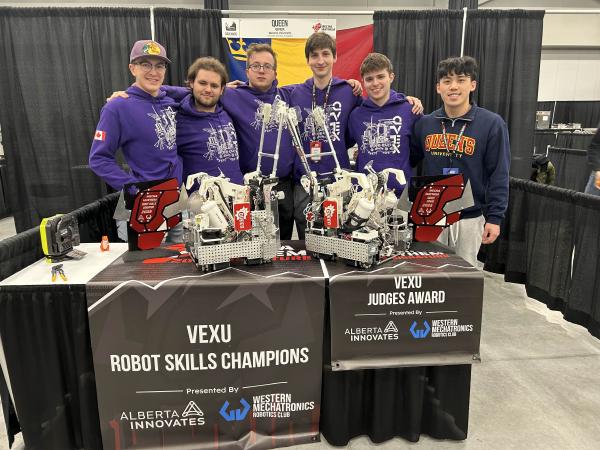
- Won 12 awards, the Worlds Build Award, and the AI Skills World Championship.
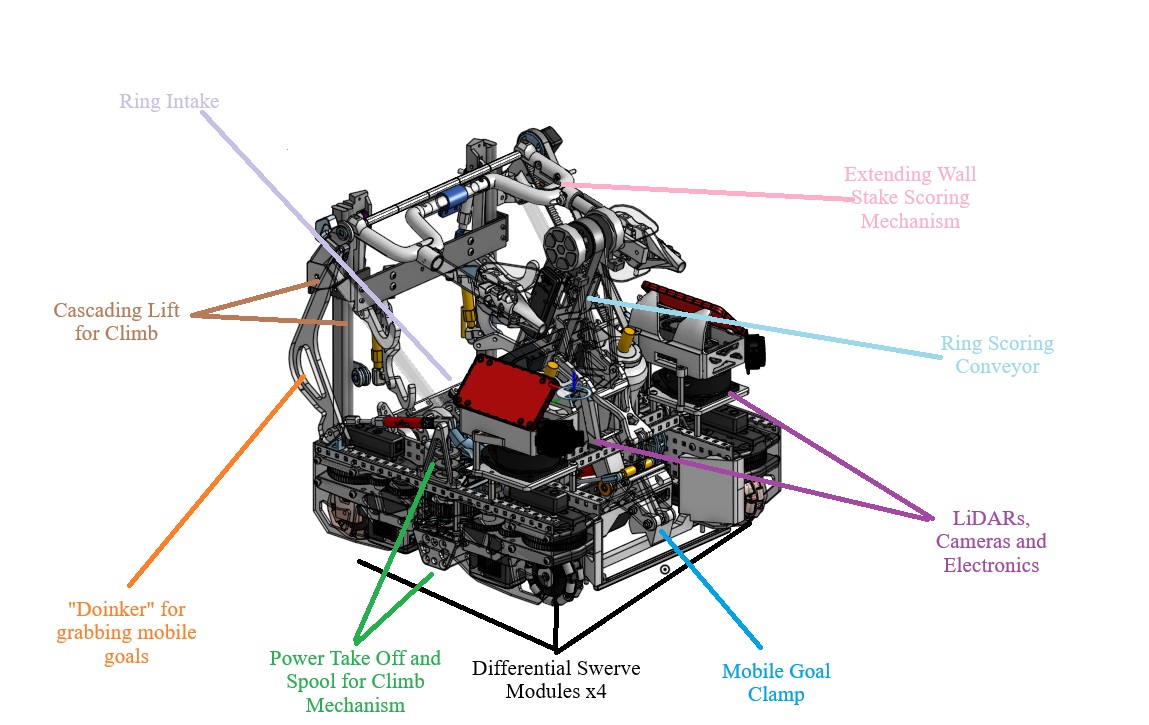
This post covers the second half of my year directing mechanical design for the Queen’s VEX Robotics Team. QVEX competes in a two-vs-two university robotics game that changes every year. The 2024–2025 game, High Stakes, challenged teams to score rings on stakes and climb a three-foot ladder. In eight months, we built four robots, won 12 awards at six tournaments across North America, developed unconventional mechanisms, and became the VEX AI Skills World Champions.
What We Built
From February to May, we built two robots. One used a differential-swerve drivetrain with a power take-off (PTO) that redirected drivetrain power into a ladder-climbing mechanism. The other used a conventional tank drivetrain optimized for speed. Both collected rings from the floor and scored them on stakes. During the 30-second autonomous period, onboard LiDARs, IMUs, cameras, and custom sensor PCBs supported field localization. The Pits N’ Parts overview video above explains the robots in detail.
Here is the climbing robot reaching the top of the ladder for the first time. The PTO redirects drivetrain power into a cascading lift that raises and lowers the robot.
It is customary to make a reveal video for your robots, so here is ours:
This World Championship match showcases both robots, although our alliance was disqualified for interfering with the opposing team’s climb.
Here is the 24-inch robot in CAD. We use Onshape for its version-control and collaboration features.
Managing the number of interacting subsystems required clear interface definitions and regular communication across the team.
We performed extensive subsystem and full-robot testing to improve reliability:
HTD5M Belt Scoring Testing
Cascade Lift Testing
Swerve Debugging
Full Scoring Test
How We Made It
The VEX U rules restrict the available sensors, actuators, and materials. Teams must use VEX motors—small DC gearmotors with encoders—and most sensors must come from the VEX ecosystem, although devices such as LiDARs are permitted. Our robots combined 3D-printed PLA+ parts with CNC-machined polycarbonate and 6061 aluminum.
The team’s first CNC router expanded our design capabilities and allowed us to produce high-strength parts quickly.
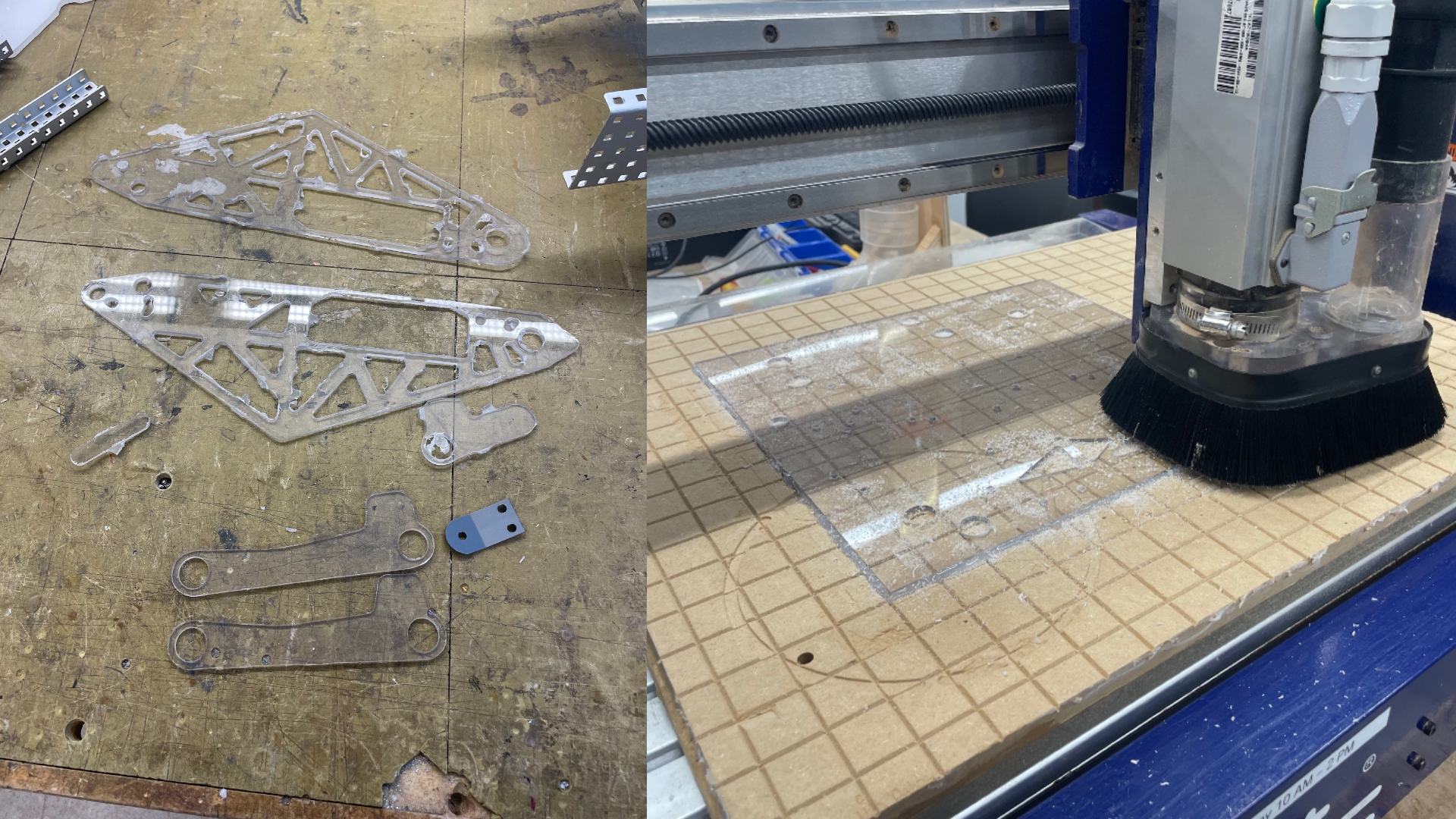 CNC-machined polycarbonate frame parts. When properly braced, polycarbonate provides excellent strength and impact resistance where PLA is insufficient but aluminum is unnecessary.
We used 3D printing for complex geometry that still needed moderate strength. These double-jointed intake ramps are one example: the lower joint needed a cutout that interlocked with the upper ramp and would have been difficult to machine on our CNC router.
The white PLA ramps combine complex geometry with enough strength to withstand impacts from the ladder.
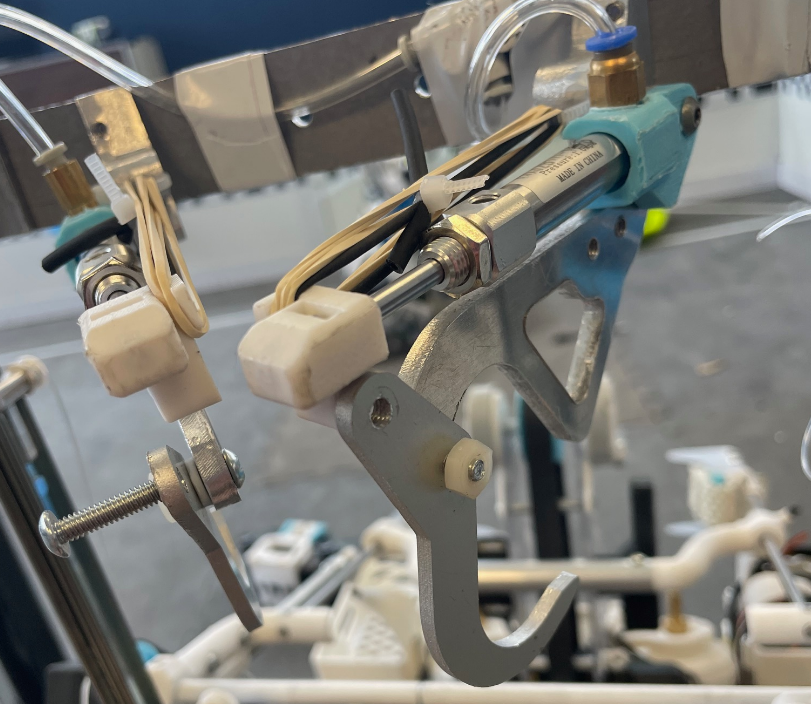
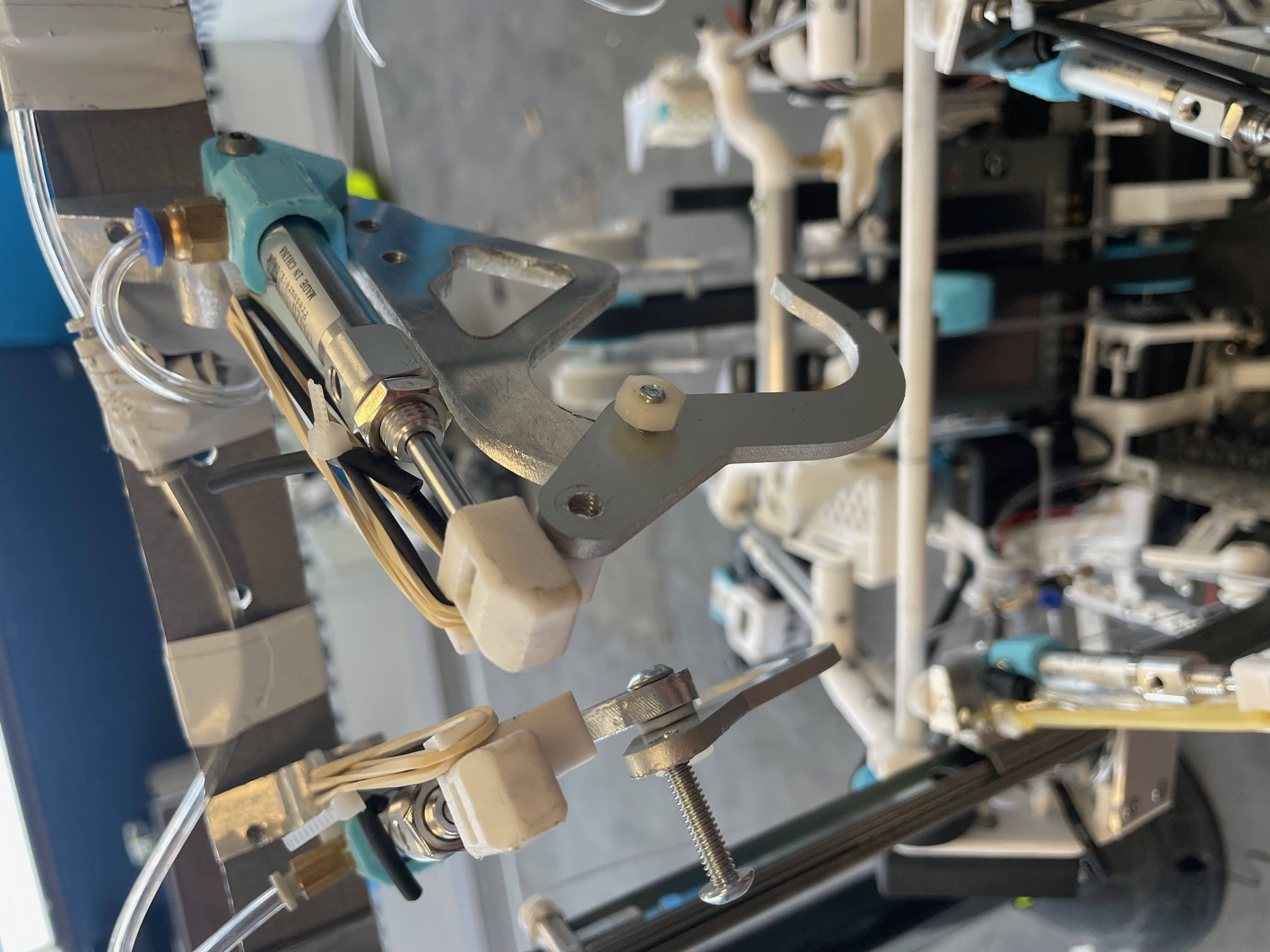
These ladder hooks were initially machined from polycarbonate, but excessive deflection led us to switch to 6061 aluminum.
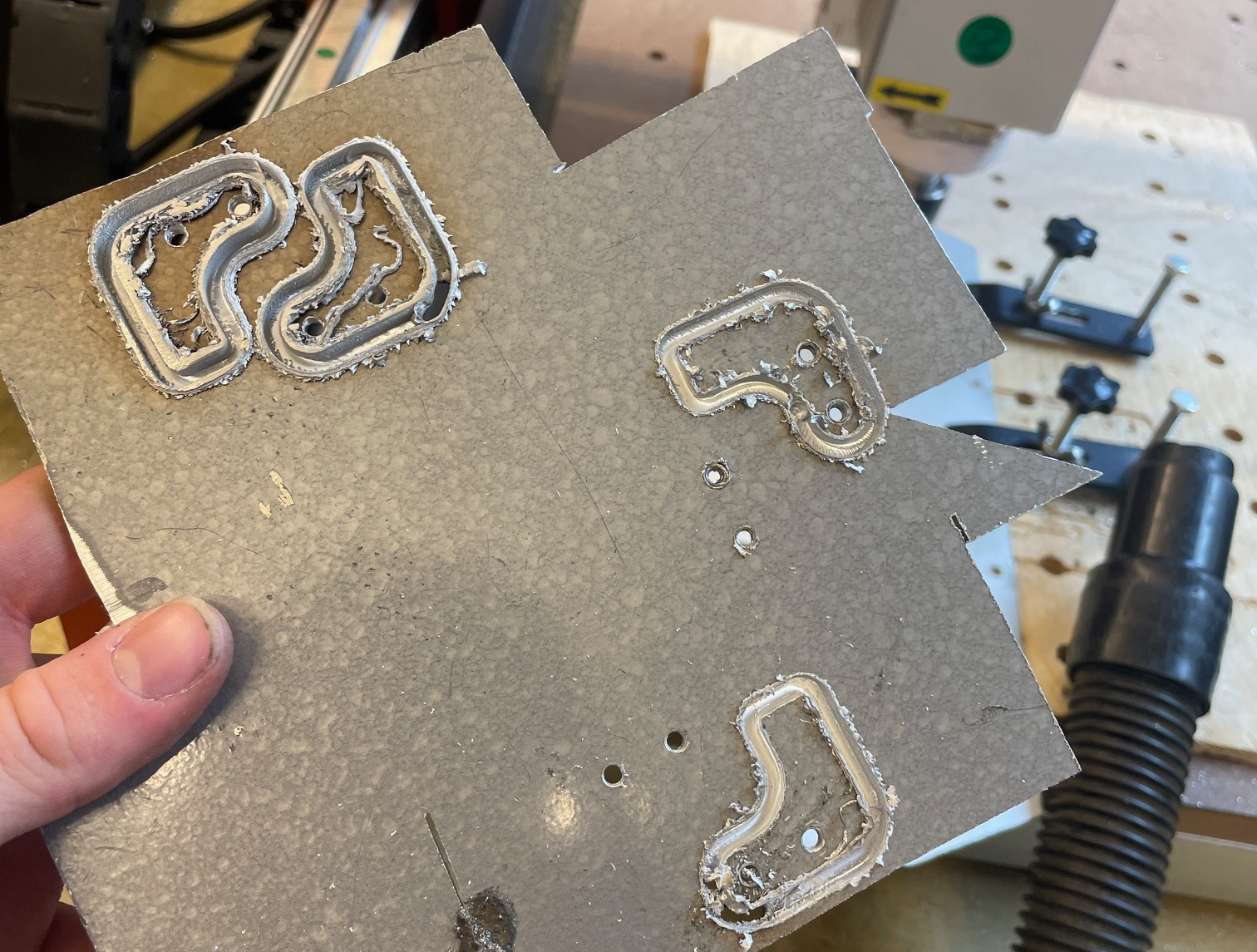
This season taught me how to generate G-code from 3D models, set work offsets and zero positions, manage chips with dust collection, and select appropriate feeds and speeds.
What We Learned
My three main takeaways were the importance of concept selection, material choice, and disciplined CAD practices.
Strong execution cannot rescue the wrong concept. We spent more time comparing ideas before committing to detailed design, using quick prototypes whenever we lacked enough information to make a confident decision.
Material selection also became a central part of the design process. Instead of defaulting to 3D printing, we selected PLA, polycarbonate, or aluminum based on geometry, strength, stiffness, mass, and cost. Bearings and idlers also helped control friction in heavily loaded mechanisms.
Early in the season, I often left sketches underdefined because rebuilding one seemed faster than constraining it properly. That approach failed as the assembly grew to hundreds of parts. Fully defining sketches and building stable references made later changes far more manageable.
What We Accomplished
This year we won 12 awards in total, including being named the Canadian Skills Champions and the VEX AI World Skills Champions.
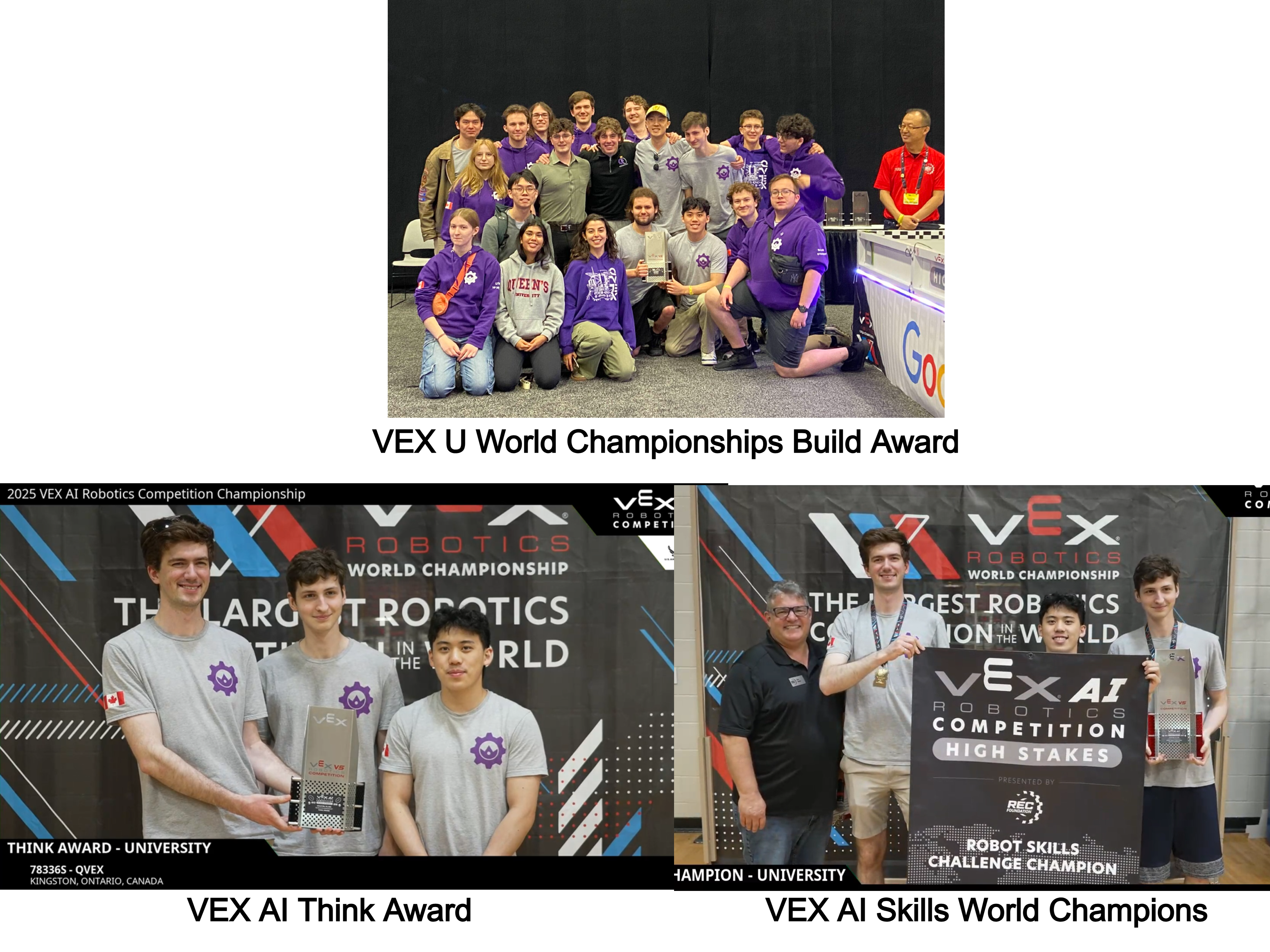
I am proud of the team’s work designing and testing these robots. Among 100 teams, we received the World Championship Build Award for construction quality, durability, attention to detail, and reliability.
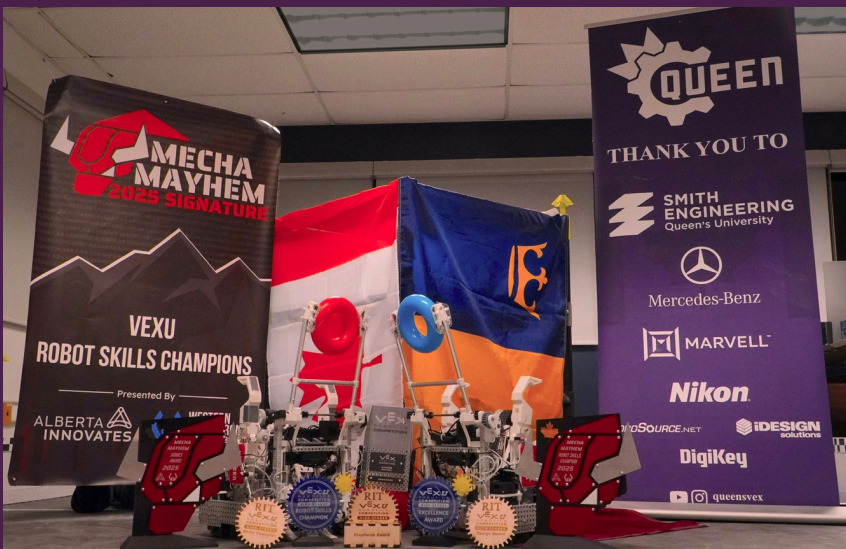 Our qualification robots and their results
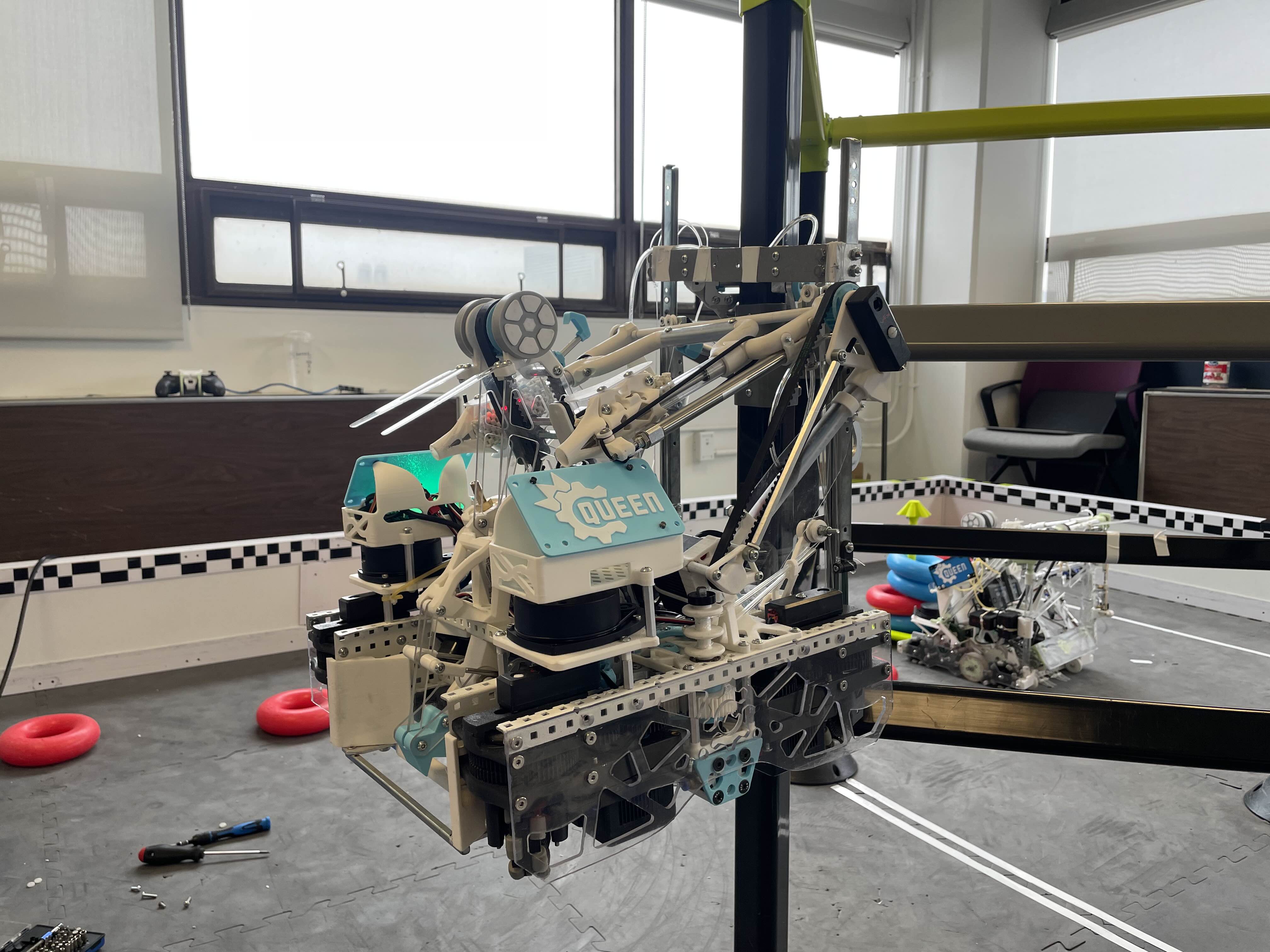
 Sunrise in Kingston after late-night building







Related albums
VEX Robotics Qualification Robots
- Directed mechanical design for four VEX U competition robots.
- Used adjustable, test-driven mechanisms to improve scoring consistency.
- Reached third globally, earned eight awards, and set an unofficial autonomous-skills record.
VR Hand Tracking Characterization
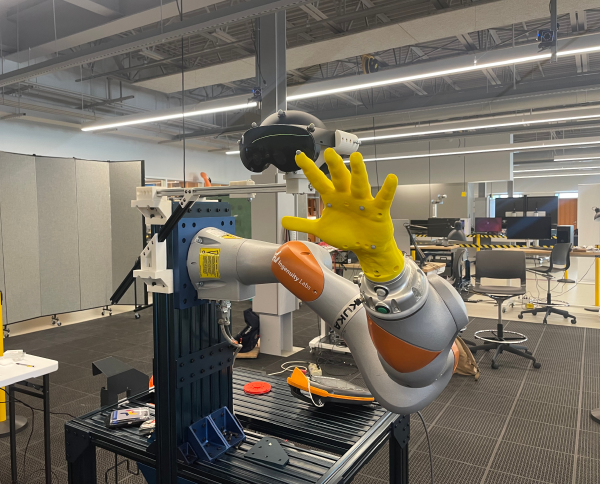
- Built repeatable VR hand-tracking experiments around a 7-DOF KUKA cobot.
- Combined motion capture with a 3D-printed hand to establish sub-millimeter ground truth.
- Compared Meta Quest headsets in research published at IEEE VR 2025.
Robot-Served Snow Cone Cell
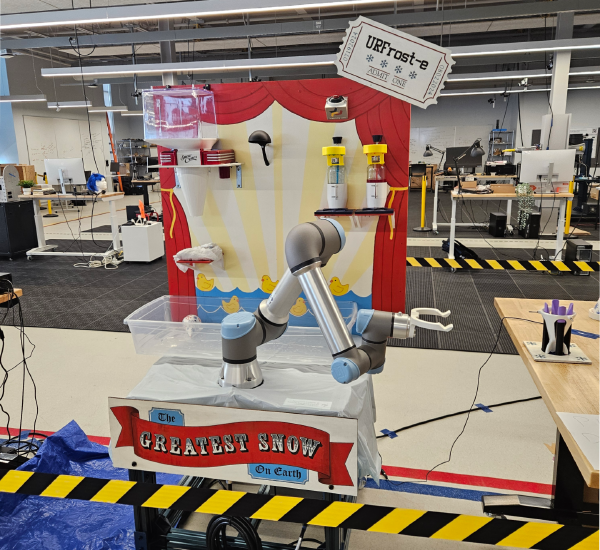
- Helped build a robot cell that prepared and served snow cones automatically.
- Designed the cell layout and a physical ordering interface for red or blue cones.
- Connected user input to a ROS 2 sequence that served roughly 50 conference guests.